
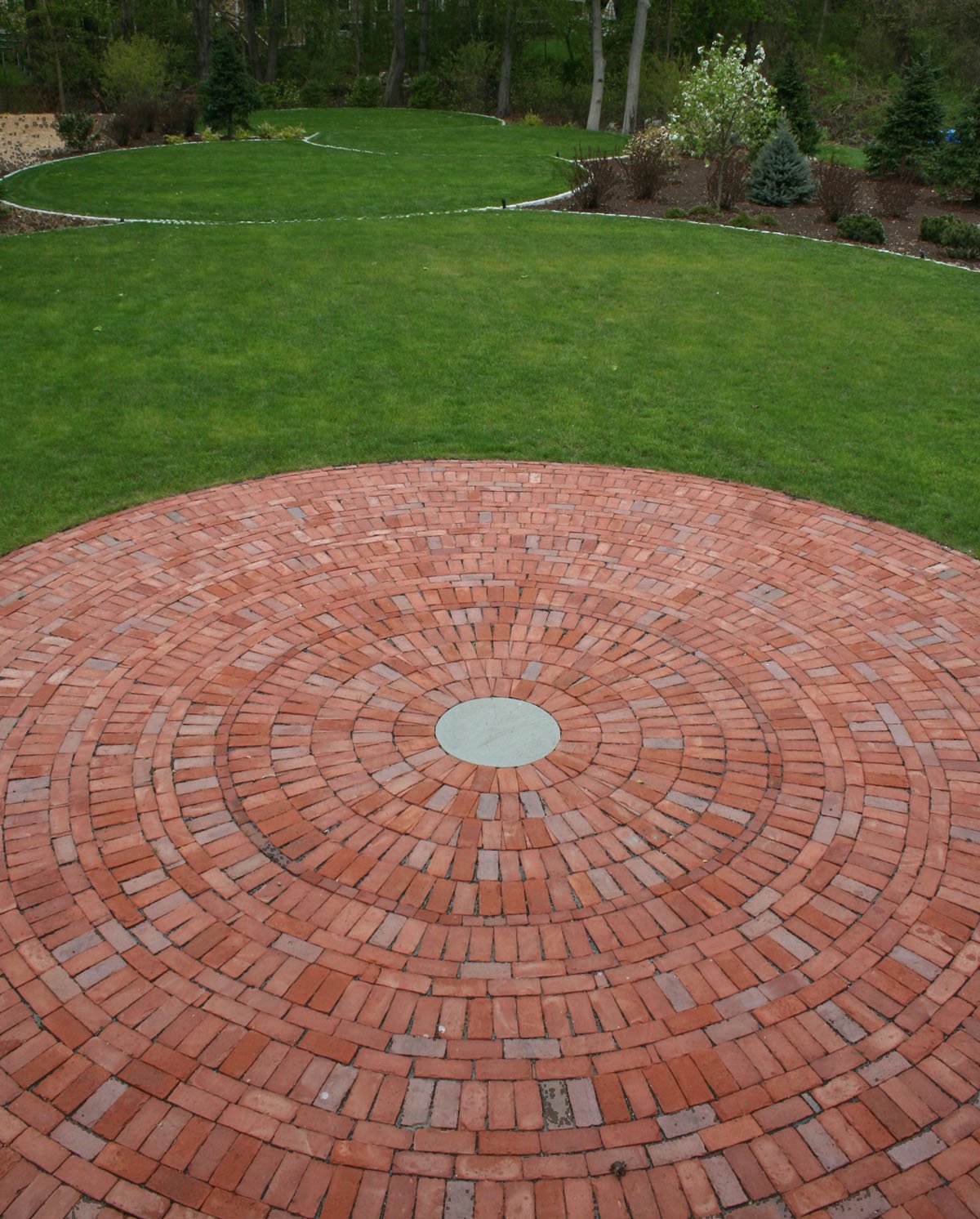
Ever since I was a little boy, I’ve had a fascination with bricks. While other kids played with board games or erector sets, I spent hours in the sandbox with my dump truck, front-end loader, and dozens of bricks—building child-sized highways, bridges, and structures. No surprise, then, that 30 years later, I run my own landscape design/build firm, still working with trucks, loaders, and bricks on a much grander scale.
Common Brick Mistakes
Brick adds warmth and invitation to gardens—like a classic walkway or terrace—but it’s often misused or underutilized. Too many landscapes default to ugly asphalt or plain concrete pavers. Even when brick is chosen, it’s usually laid in boring, unimaginative patterns.
Site Prep Is Key
Your mason friend is right: pros get paid for the base, not just laying bricks. Proper excavation and foundation make installation easy, like spreading icing on a cake. Skip it, and you’ll end up with a bumpy, frost-heaved mess that falls apart fast.
Pro tip: Fully excavate, compact gravel, and add sand for a stable, professional base.
Choose Bricks Wisely
Bricks aren’t all the same—they vary in shape, color, quality, and price.
- Molded bricks: Uniform size; easiest for complex patterns.
- Wire-cut bricks: Rustic, handmade look; trickier to lay but ideal for traditional gardens.
Pick paving-specific bricks in colors from cream to deep brown—test samples in your garden like carpet swatches. Avoid wall or reclaimed bricks; they chip and crumble under foot traffic and frost.
Patterns Make the Difference
Running bond (staggered rows) works for paths but feels monotonous on patios. Upgrade to herringbone or mix patterns with a running bond border for visual pop. Think of your terrace as an oriental rug: intricate brickwork adds year-round beauty and elevates your landscape.
And one final bit of advice: experiment on the ground before setting anything in place. As often as not we’ll alter the final layout once we see the actual pattern and scale.