Until recently, my idea of the perfect cutting garden was one managed by someone else—perhaps your grandmother, a helpful spouse, or, if you were truly fortunate, a gardener. The thought of planting, maintaining, and arranging all those flowers myself seemed overwhelming, especially when professional florists made everything look effortless.
But three small realizations changed everything—convincing me that anyone can create a stunning home cutting garden.
How I Discovered the Joy of Home-Grown Bouquets
First came a hard look at my household budget. I discovered I was spending an astonishing amount on fresh flowers—far more than on any other garden item. That habit had to change.Next, I met several wonderful floral designers who demystified the art of flower arranging. They showed me it’s really about creativity and play, not perfection.Finally, I learned a few simple cutting garden design principles that make this type of garden easy, cost-effective, and immensely rewarding—exactly what I’ll share here.
Why You Need a Separate Cutting Garden
At its core, a cutting garden is a space devoted entirely to growing flowers for harvest. You might wonder: Can’t I just snip blooms from my ornamental borders?
Not if you’ve designed those borders correctly. Each plant in a well-planned ornamental garden contributes to a cohesive tapestry of color and texture. Start cutting flowers from it regularly, and you’ll destroy the effect. That’s why every flower lover who craves fresh arrangements all season long needs a separate space for cutting.
Cutting Garden Layout and Design Tips
The first secret of a productive and low-maintenance cutting garden is good layout. Treat your cutting garden like a vegetable garden—focused on utility first and beauty second.
Here are a few design tips:
- Choose a sunny, accessible location. Keep it slightly out of sight so you’re not tempted to chase constant bloom.
- Plan practical beds. Beds should be no more than four feet wide, allowing you to reach from both sides.
- Use a simple geometric layout. Straight rows or square beds make weeding, watering, and harvesting easy.
- Consider proximity to your vegetable patch. The two spaces share similar needs and aesthetics.
Don’t worry about perfect color schemes or artistic combinations. Your creativity comes after the harvest—when you’re arranging the flowers indoors.
Soil Preparation and Garden Maintenance
Healthy soil equals healthy stems. To get the most from your cutting garden:
- Amend with compost or well-rotted manure before planting.
- Use both quick-release and slow-release fertilizers for steady nutrient availability.
- Water at least one inch per week, supplementing during dry spells.
- Apply mulch to conserve moisture and suppress weeds.
And most importantly—keep cutting! Many flower varieties stop producing if allowed to go to seed.
Final Thoughts on Growing a Cutting GardenA thoughtfully designed cutting garden rewards you with armloads of blooms, reduced floral expenses, and the quiet satisfaction that comes from creating beauty yourself. Whether you’re in Boston, Marlborough, or anywhere in New England, these fundamentals will help you plant a garden that’s both abundant and effortless.
Massachusetts Cut-flower Timeline and Recommendations
- Start indoors in late winter to early spring: zinnias, dahlias, celosia, scabiosa, ageratum, asters, and lisianthus-type crops when you want the longest season in MA.
- Direct sow after the last frost in most of Massachusetts, usually May 1–15: cosmos, bachelor’s buttons, calendula, bupleurum, nigella, and sunflowers.
- Plant bulbs in fall for spring cutting: daffodils, tulips, hyacinths, alliums, and iris types that are hardy here.
- Lean on perennials for early and repeat harvests: peonies, bleeding heart, lupines, delphinium, yarrow, and phlox help fill the spring-to-early-summer window before annuals peak.
Annuals for MA
- Zinnias — Heat-loving, easy to grow, and among the best for long vase life.
- Cosmos — Light stems and a long bloom window make them excellent bouquet fillers.
- Sunflowers — Branching cutting types keep producing stems for repeated harvests.
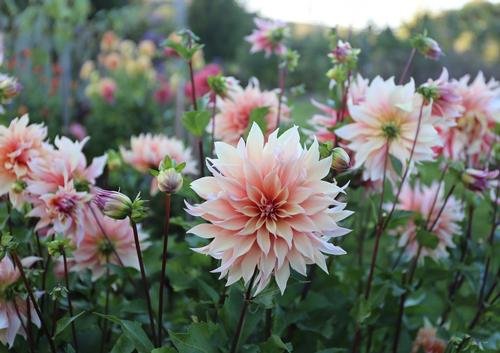
- Dahlias — One of the strongest summer cut flowers for stem quality and bloom variety.
- Verbena bonariensis — Tall, airy purple clusters add height without crowding an arrangement.
- Rudbeckia (annual types) — Bright, sturdy blooms that hold up well after cutting.
- Ageratum — Soft blue flower clusters work well as a compact filler.
- Amaranthus — Dramatic texture and strong color for focal or trailing effects.
- Celosia — Long-lasting plumes or crests that dry beautifully too.
- Scabiosa — Refined blooms with excellent cut-flower value and graceful stems.
- Larkspur — Tall spring spikes that are especially useful in cooler New England weather.
- Bachelor’s buttons — Easy direct-sow flower with classic blue cutting value.
- Nigella — Delicate blooms and attractive seed pods for texture.
- Cleome — Tall, branching stems add a loose, cottage-garden look.
- Gomphrena — Very durable and long-lasting, even as a dried flower.
- China asters — Reliable late-season color when many other annuals are fading.
- Calendula — Quick to bloom and useful for bright, informal bouquets.
- Tithonia — Bold orange blooms that thrive in full sun and heat.
- Sweet peas — Fragrant early flowers that are especially valued for mixed spring arrangements.
- Nicotiana — Soft, fragrant flowers that add fragrance and volume.
- Bupleurum — A favorite green filler that makes other flowers stand out.
- Didiscus — Delicate, lacy blue umbels that add softness.
- Strawflower — Long-lasting fresh or dried stems with papery texture.
- Bells of Ireland — Tall green spikes that give structure and a modern look.
- Clarkia — Light, airy flowers that are easy to work into small bouquets.
Bulbs for MA
- Daffodils — Very dependable in Massachusetts and excellent for early spring cutting.
- Tulips — Tall late tulips give strong stems and a clean spring look.
- Hyacinths — Dense, fragrant flower spikes that are almost arrangement-ready on their own.
- Gladiolus — Tall vertical stems that provide height in summer arrangements.
- Lilies — Oriental and Asiatic types offer bold flowers and long stems.
- Allium — Architectural globes that are especially useful for structure.
- Dutch iris — Sleek and elegant for late spring bouquets.
- Ranunculus — Layered blooms with excellent vase life when grown successfully.
- Anemone coronaria — Bright, poppy-like flowers that are very useful in spring mixes.
- Freesia — Fragrant and dainty, good for refined arrangements. (indoors only)
- Crocosmia — Curving stems add movement and a warm color note.
- Muscari — Small but useful as an accent in spring bunches.
- Camassia — Soft blue spikes that suit naturalistic designs.
Perennials for MA
- Peonies — Classic Massachusetts cut flowers with fragrance, big blooms, and excellent vase appeal.
- Bleeding heart — An early spring perennial that gives elegant arching stems.
- Delphinium — Tall spires create instant vertical drama in bouquets.
- Lupines — Great early-season structure and strong color in cooler weather.
- Shasta daisies — Clean, simple blooms that mix easily with almost anything.
- Echinacea — Durable stems and strong centers make them useful fresh or dried.
- Yarrow — Flat-topped clusters are excellent for filler and drying.
- Bee balm — Unusual flower texture and good summer color.
- Veronica — Long, neat spikes that work well as line flowers.
- Astilbe — Feathery plumes soften arrangements and add texture.
- Campanula — Bell-shaped flowers give a cottage-garden look.
- Coreopsis — Light, cheerful blooms that are easy to harvest repeatedly.
- Gaillardia — Heat-tolerant blooms that keep coming through summer.
- Helenium — Strong late-season color when the garden starts to wane.
- Alstroemeria — Long vase life and multiple blooms per stem.
- Garden phlox — Fragrant clusters that are useful in midsummer bouquets.
- Japanese anemone — Elegant late-season flowers on flexible stems.
- Hellebores — Early, subtle blooms that are valuable before the main season starts.
- Baptisia — Interesting stems and seed pods for structure and texture.
- Penstemon — Tubular flowers with a strong vertical line.
- Sedum — Late-season flower heads are very sturdy and easy to use.
- Lavender — Fragrant, harvestable stems that work fresh or dried.
- Geum — Cheerful, long-lasting stems for smaller bouquets.
- Astrantia — Fine, starry flowers that make a sophisticated filler.
- Salvia nemorosa — Spikes of blue or purple that bloom repeatedly.
- Foxglove — Tall spires for a classic New England cottage-garden look.
- Artemisia — Silvery foliage that makes brighter blooms pop.
- Heuchera — Colorful foliage useful for mixed arrangements.
- Brunnera — Early flowers plus attractive leaves for spring cutting.
Practical MA notes
Because most of Massachusetts gets its last frost between May 1 and May 15, tender annuals should wait until after that date unless you’re transplanting hardened-off starts. In western MA, the frost-free season can be shorter, so early perennials and bulbs matter even more if you want continuous cutting material. UMass also notes that Massachusetts growers often plan around about 120 frost-free days, so choosing fast-to-bloom annuals and repeated-cut flowers is especially helpful.