Thomas Jefferson, at age 66, once wrote to a friend, “Though an old man, I am but a young gardener.” Having almost reached Jefferson’s years, I find that I can agree with his sentiments wholeheartedly. It’s amazing how much you continue to learn as you garden, and even more surprising is how much your horticultural taste alters in the process. Take spring bulbs, for instance. Before, in my gardening “youth,” all that mattered to me was punch: lots of bright bands in broad, bold strokes, perfectly personified by hundreds of daffodils pirouetting in the breeze. But as I’ve matured, my preferences have begun to shift. Most noticeably, I no longer have much tolerance for all that slowly decaying foliage that many species, like narcissus, carry right into high summer. The problem, of course, is that if you attempt to clean up the mess before Mother Nature has her way, you remove the bulb’s ability to store energy for the next season. The result is that you’re often stuck with masses of withering leaves well into August, making for a very untidy garden—especially in small urban or suburban spaces where every square foot counts.
Secondly, as I’ve grown older, I seem to have acquired a case of yellow fatigue—everywhere you turn in the spring bulb garden, you find this same blaring color. Instead, these days I’m much more attracted to a subtle palette: pale pink, white, and that most elusive color in the spring border, blue. Blue is a wonderful hue, one that gently merges brighter shades and provides the perfect foil to competing yellows and golds. The problem is that blue is not all that common in the spring garden, unless you know where to look. Here are a selection of my favorite blue bulbs, which not only introduce a delightful element of cerulean into the landscape, but also possess the extremely welcome habit of tidily retiring their foliage after flowering.
Chionodoxa spp. — Glory of the Snow
This accommodating species, originally native to the mountains of Turkey and Greece, deserves to be far better known than it is. For what other bulb, when left to its own devices, will soon spread by seed to form a veritable blue carpet in your backyard? Glory of the Snow is a direct translation of the Greek, from chion “snow” and doxa “glory,” reflecting quite accurately its habit of appearing long before the weather has warmed. Growing only 4–6 inches high, chionodoxa is perfect for planting in areas that are sunny in spring—such as under deciduous trees—but shady later on in the year, mixed and mingled among other bulbs and perennials. White forms are also available. Hardy to Zone 4.
Camassia spp. — Meadow Hyacinth
This American native is the star of the late spring border, for just as you think the bulb show is completely over in early June, suddenly the 24-inch flower stalks of camassia burst forth, blanketing the garden in sheets of blue—a small miracle that has the added benefit of covering the messy exit of many of their less considerate bulb cousins. Camassia derives its name from the Native American quamash, testifying to the bulb’s importance as a food source for the indigenous peoples of the Pacific Northwest. Camassia prefers a sunny site with ample moisture and humus. White and violet forms are also available. Hardy to Zone 4–5.
Hyacinthoides spp. — Bluebells
Now here’s a plant that’s almost impossible to kill, has great flower and foliage, and will grow in shade. So why don’t we see more of it in American gardens? Perhaps part of the problem is considerable perplexity in the nomenclature: the species has variously been called Scilla, Agraphis, Endymion, and finally now Hyacinthoides, which means “hyacinth-like.” Several subspecies and cultivars, almost inevitably confused in the trade, also add to the problem. Whatever the correct label, the English wised up to the glories of hyacinthoides long ago, and this Mediterranean native is now naturalized throughout the woods and pastures of Great Britain, where its annual flowering almost constitutes a national event.
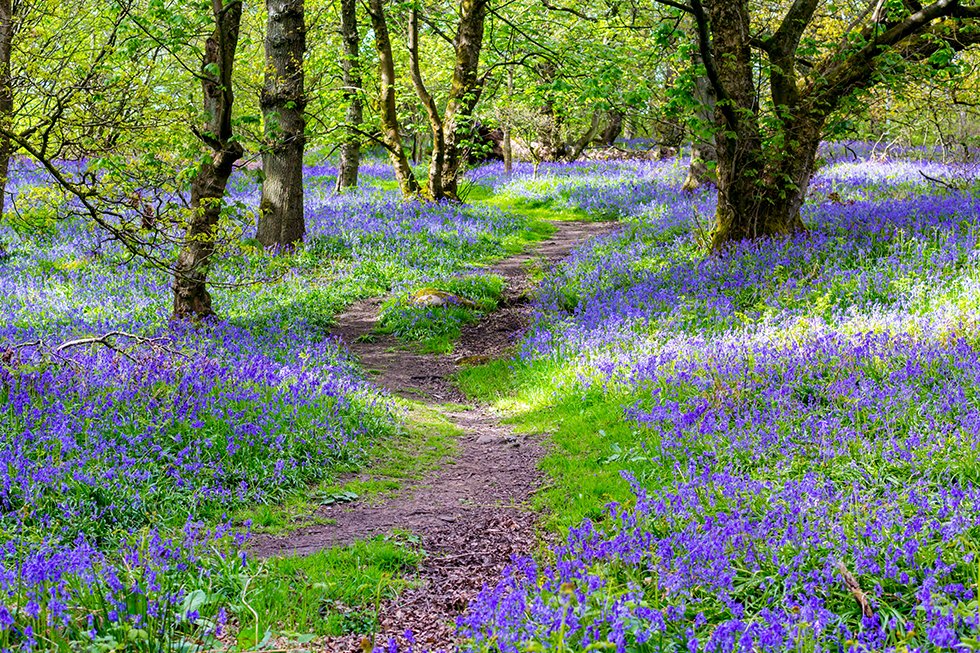
This is one of the few bulbs you really can’t get enough of, as bluebells look better when massed in large drifts. Here in my garden, I’ve teamed them with late-emerging perennials like hosta, which makes for a terrific combination, as the bluebells’ foliage, though not as persistent as daffodils, does linger a bit longer than I would like. Planted in this manner, the bluebells flower, then the hostas rise over them to gracefully hide their departure. Growing about 12 inches high, bluebells are hardy to Zone 4–5. Pink, white, and dark blue forms are also available.
Ipheion
Here’s a species whose name—of unknown derivation—is as unfamiliar as its flower is to stateside gardeners. That’s a shame, for like bluebells, this South American native is well known in Europe. Growing about 8 inches tall, the lilac-blue flowers resemble those of paperwhites and are lightly scented. (The leaves, curiously enough, smell like garlic when crushed—a great incentive to tread carefully in the garden.) A touch invasive in warm climates, ipheion will spread rapidly where winters are mild and is useful for filling in between shrubs such as rhododendrons and azaleas. Ipheion differs from the other bulbs listed here in that the foliage often appears in the fall. Bloom time is anywhere from winter to late spring, depending on your location. Purple, white, violet, and lavender cultivars exist. Hardy to Zone 6.
Scilla siberica — Siberian Squill
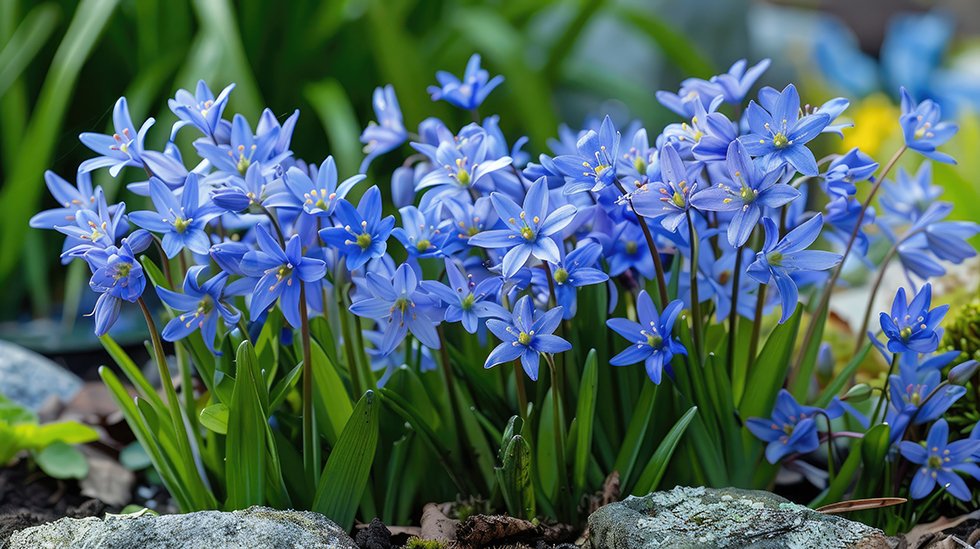
If you’re in search of a true, saturated blue, look no further. This diminutive bulb produces nodding, bell-like flowers of an almost electric hue very early in the season. Growing just 4–8 inches tall, it naturalizes readily, forming dense colonies over time, particularly in lawns or beneath deciduous trees. The foliage disappears quickly after flowering, making it an excellent choice for those, like myself, who prefer tidiness. Hardy to Zone 3.
Muscari armeniacum — Grape Hyacinth
Though sometimes dismissed as commonplace, muscari earns its place through sheer reliability and color intensity. The tight clusters of cobalt-blue flowers resemble miniature bunches of grapes and appear in mid-spring. Growing 6–8 inches tall, they are ideal for edging paths or weaving through perennial borders. Best of all, the foliage fades relatively unobtrusively compared to larger bulbs. Pale blue and even white selections are also available. Hardy to Zone 4.
Puschkinia scilloides — Striped Squill
A close relative of scilla, puschkinia offers a more refined effect, with icy pale blue to white petals delicately striped in deeper blue. Blooming very early, often alongside chionodoxa, it reaches about 6 inches in height and performs beautifully in rock gardens or naturalized settings. Like many of the smaller bulbs, it disappears quickly after flowering. Hardy to Zone 4.
Finally, a word of general bulb advice. Remember that although all these species are labeled “spring” bulbs, the term refers to the flowering, not the planting time. Spring bulbs are only available in the fall, for autumn planting. Though the exact methodology varies by species, in general most bulbs are set three to four times deeper than their diameter and benefit from good garden soil supplemented with a handful of bone meal or superphosphate mixed in. While planting can occur anytime until the ground freezes (and many’s the occasion I’ve been running around the yard madly scraping off a coating of snow to plant the last of my bulbs), waiting until the last moment both noticeably increases your blood pressure and noticeably decreases your chances of success the following spring. It’s much better to plant your bulbs just after the first frost, when the ground is still warm and workable and the bulbs have sufficient time to develop healthy roots before winter sets in.