
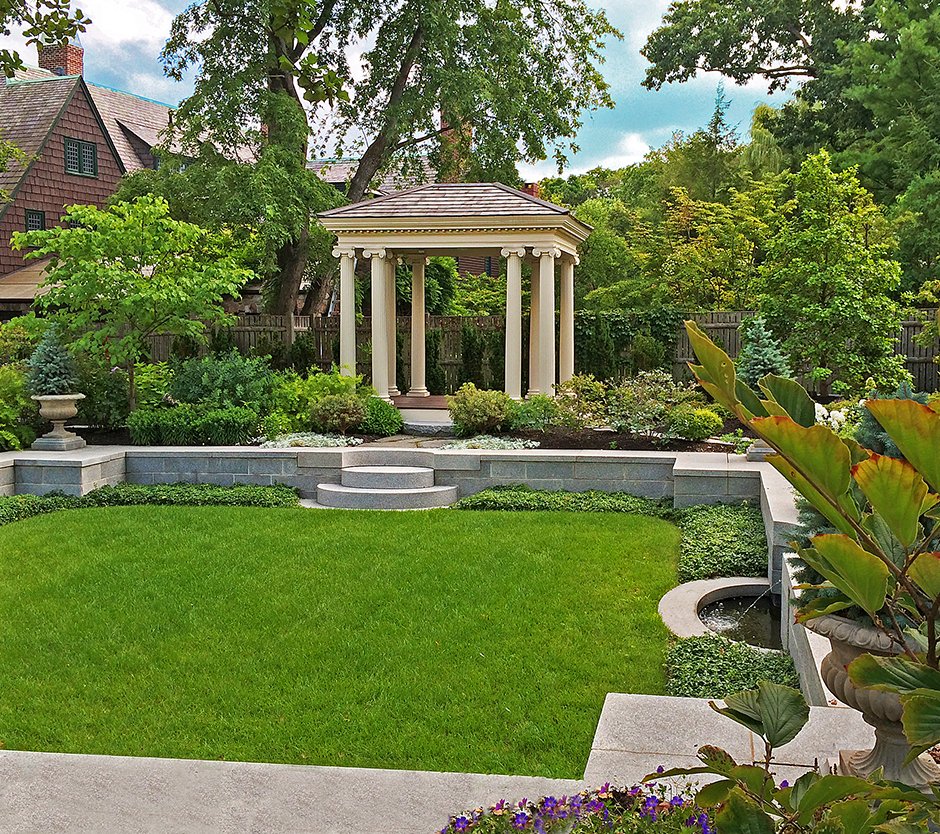
This delightful urban garden, completed in 2013 for a historic home in Cambridge, exemplifies how careful design can reconnect architecture and landscape into a unified whole. The property’s owners wanted a retreat that felt at once timeless and comfortable—a space that would honor the home’s early Federal character while accommodating the needs of modern outdoor living. Our design began with an exploration of proportion and style: understanding that the most successful gardens take their cues directly from the house.
The centerpiece of the garden is a classical summer house inspired by early Federal designs. Its restrained geometry and graceful lines echo the architecture of the home, creating a natural visual dialogue between building and garden. Matching architectural and landscape styles is not mere aesthetic correctness—it is the key to creating a sense of continuity and calm. When materials, forms, and ornament share a common language, the eye moves effortlessly from structure to plantings, perceiving them as parts of a single composition. In this case, the crisp symmetry of the summer house anchors the surrounding garden terraces, reinforcing the harmony of the entire setting.
Just as important as style is function. This garden was conceived as a true outdoor living area—a place for rest, conversation, and quiet pleasure beneath the open sky. We wanted the homeowners to feel that stepping outside was as inviting as settling into any interior room. The cedar roof structure of the summer house features an innovative ceiling fan system that both cools occupants on warm days and discourages mosquitos, ensuring that summer activities can be enjoyed in comfort. With its sheltered seating area and thoughtful integration into the garden’s geometry, the pavilion has become the perfect spot for reading or enjoying a cool drink—a living extension of the home itself.
Every element of the garden demonstrates the importance of craftsmanship. In a refined space such as this, nothing can be hidden; each joint, material, and detail is on full display. The stone walls and steps were laid by hand, the cedar joinery precisely cut, and each planting selected for mature proportion and long‑term beauty. Craftsmanship brings authenticity—a tactile richness that distinguishes true tradition from mere imitation. It reminds us that gardens, like historic homes, should be built to endure, their beauty deepening as surfaces weather and plants mature.
For gardens in urban environments, water plays an especially vital role. Surrounded by city life and the hum of modern activity, the addition of a small fountain or reflecting pool provides an oasis of calm. In this sunken garden, a narrow runnel introduces movement and sound—its gentle trickle masking street noise while reflecting the changeable New England sky. Water brings both visual delight and emotional respite, its surface a living mirror that animates space and invites pause. In compact urban landscapes, this element transforms even modest gardens into worlds of their own.
Ultimately, the Cambridge sunken garden is a study in balance—the balance of architecture and landscape, history and modern comfort, form and function. By matching style between house and garden, emphasizing fine craftsmanship, and creating spaces that invite daily use, the design achieves a quiet elegance rarely seen in contemporary settings. The addition of water completes the sensory experience, linking sound, light, and motion into a cohesive whole.
In all our work, we strive to create gardens that both respect their architectural roots and enrich the way people live. Here, beneath the cedar canopy and surrounded by carefully shaped greenery, the owners can relax, read, or share a moment of conversation, enjoying a refuge that feels both historic and thoroughly alive—a garden that truly belongs to its house, its city, and its time.