
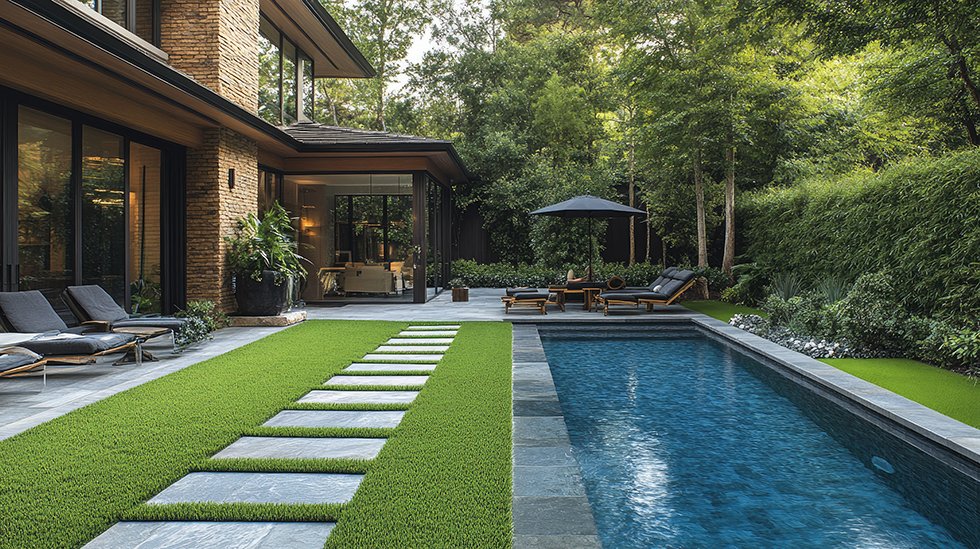
Recently, I was called in to consult with a family who had just completed a new pool. There had been no real designer involved—only a general contractor who simply installed the largest pool the site could accommodate. The result was, frankly, a disaster.
The pool sat just five feet from the main patio doors, leaving almost no room for seating. The fencing—a mismatched picket conglomeration—clashed entirely with the home’s modern style. Worse still, the pool area had been terraced so that, only a foot or two beyond the deck, the land dropped more than ten feet. While such dramatic grading might work with a sweeping ocean view, here it offered a direct line of sight into neighboring bedroom windows, compromising everyone’s privacy.
By the time I arrived, meaningful corrections would have required enormous expense. Aside from, as Frank Lloyd Wright once quipped, “planting vines,” there was little to be done. All of it, however, could have been avoided with thoughtful design from the outset. If you’re planning a new pool—or renovating an existing one—here are a few key principles to keep in mind.
Location, location, location. The traditional advice is to place a pool in the sunniest available spot, maximizing warmth and minimizing heating costs. While that’s sound in theory, it comes with a caveat. If the sunniest location puts the pool directly on top of your living space, it’s often better to sacrifice a bit of sun and site the pool at a comfortable remove from the house.
Pools are visually appealing only when in use—and in many regions, that’s just a few months each year. The rest of the time, they sit covered and dormant. On larger properties, the ideal placement is often in a separate garden area: close enough for convenience, but far enough to maintain a sense of separation from the main living spaces. On smaller properties, where space is at a premium, I often recommend reducing the pool to its minimum functional size in order to maximize surrounding landscape. If your goal is simply a place for children to cool off, there’s little need for a 75-foot lap pool. Designing for how you’ll actually use the space can save substantial money.
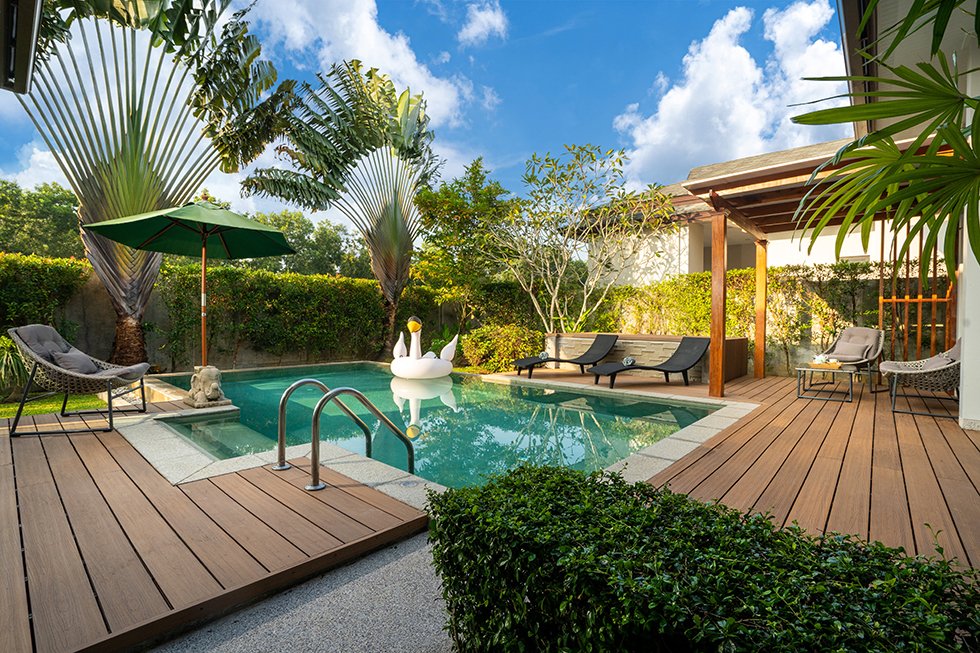
Fencing and privacy. Local codes almost always require pools to be enclosed, typically with barriers that prevent access by young children. While these regulations limit your options, they don’t eliminate the need for good design. Too often, homeowners choose the quickest, most expedient fencing solution, with no regard for aesthetics—resulting in a space that feels more like a prison yard than a retreat.
Instead, match the fence to the architecture of your home, both in material and color. When planning its placement, allow adequate room for landscaping inside the enclosure, as well as privacy plantings beyond it if needed. Nothing ruins the pleasure of a late-night swim like the feeling of being on display. Pools, by their nature, should feel intimate and enclosed.
Planting. Quite simply, the best landscaping on your property should be around your pool. With in-ground pools often costing $50,000 or more, they represent a significant investment—one intended for enjoyment. Make it count.
Choose plants that engage the senses: fragrance, texture, color, and form. The pool area is an ideal setting for massed plantings, bold foliage, and seasonal interest. Don’t forget shade. While some people enjoy full sun, others appreciate relief on hot days. A small tree, a vine-covered pergola, or another shade structure can make the space far more comfortable.
One important caveat: avoid plants that shed excessively—leaves, blossoms, or seed pods—or you’ll create a constant maintenance burden. Likewise, place trees far enough away that, at maturity, they won’t overhang the water.
Finally, a word of practical advice. Building a pool can be one of the most rewarding landscape projects—but also one of the most frustrating, due in part to the number of less-than-reputable contractors in the field. Think “used car salesman,” and you’ll have the right idea.
Before choosing a builder, get at least five references—and follow up on every one. Visit completed projects if possible. Ask about timelines, subcontractor performance, and, most importantly, whether the project stayed on budget.
This last point is often where problems arise. Pool contracts frequently omit or underestimate key costs. For example, does the electrical allowance include both materials and labor? Often, labor—the bulk of the expense—is buried in fine print. What are the specific allowances for finishes like tile and plaster? Base-level options are typically limited, and even modest upgrades can add thousands to the final price.
And don’t overlook the obvious: ask whether anything is excluded—yes, even water. Surprisingly, some companies price pools without including the cost of filling them, which can add a significant expense at the very end of the project.
In short, do your homework—both in design and in budgeting—before signing a contract. If you do, you’ll set yourself up for smooth sailing… or rather, smooth swimming for years to come.