 For many years, I maintained a 70′ x 70’ vegetable garden laid out in the traditional fashion, with two intersecting paths and a central circular feature. It was lovely—but it was also a LOT of work. Then several things changed. First, I had been a little too successful as a gardener: the trees I had planted around the yard matured and began to shade the area. Second, the garden sat in a low spot, and as summer rainfall has grown more erratic with climate change, heavy storms began to flood it—something most vegetables simply cannot tolerate. Third, I began to feel my years. As I moved through my late 50s, I found myself less enthusiastic about spending hours on my knees.
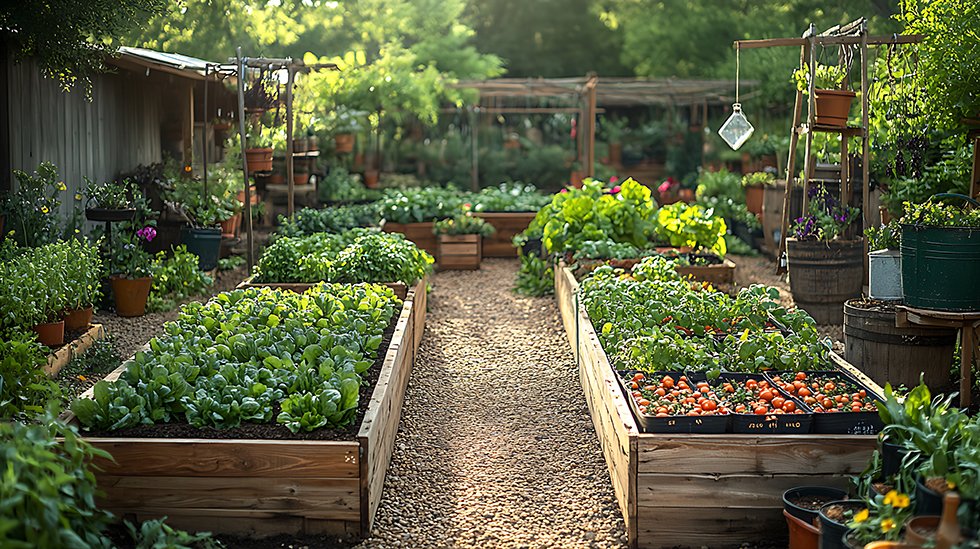
The solution? Convert the large garden into a mix of fruit trees and rambling crops like pumpkins, and relocate active vegetable production to a series of raised beds closer to the house.
Raised-bed gardening offers a number of advantages. Improved drainage is an obvious one. It also allows you to bypass poor native soil—whether excessively rocky, heavy with clay, or even contaminated, as is sometimes the case in older urban areas with residual lead. Another benefit is soil depth: if you want to grow long, well-formed root crops like carrots, parsnips, or beets, you need at least a foot of rich, stone-free soil. Raised beds also warm more quickly in spring, extending the growing season. For me, however, the greatest advantage is simple ease of use: gardening is far more enjoyable when you aren’t constantly weeding on your hands and knees.
This brings us to the question of height. Ideally, raised beds should be between 24 and 36 inches tall—the taller within that range, the better. Why? Because it eliminates bending. Planting, harvesting, and even weeding become far easier when you can sit comfortably on a stool and work your way along the bed. There are other benefits as well. Rabbits, for example—those relentless marauders of the vegetable patch—are generally unable to access taller beds, which can reduce or even eliminate the need for fencing. As for width, 36 to 48 inches is standard, allowing you to comfortably reach the center from either side.
Construction methods vary widely. Decades ago—when I first began gardening as a boy—railroad ties were commonly used. That practice ended once creosote, the preservative used in the wood, was found to be highly carcinogenic. I ate my share of vegetables grown in such beds and am still here to tell the tale, but the material quickly fell out of favor. Pressure-treated lumber followed, only to be similarly questioned for use in food gardens. While modern treatments appear to leach very little—and in amounts difficult to detect—many gardeners remain cautious.
Today, the trend leans toward naturally rot-resistant woods like cedar (expensive), or more permanent materials such as stone, brick, or concrete block (even more so). Others use standard lumber and accept that it will need replacing every 5–7 years—a solution that is both labor-intensive and, over time, costly. Personally, I am considering newer formulations of pressure-treated wood, paired with a lining of UV-stabilized plastic to prevent soil contact. Another option is the growing range of plastic lumber products, which eliminate both rot and contamination concerns, though at a premium price.
For most homeowners, the greater challenge lies not in choosing materials, but in siting and filling the beds. Location is straightforward: full sun is essential—no less than eight uninterrupted hours per day, with no significant shading. Attempt to compromise here, and your harvest will suffer.
Filling the beds, however, is another matter entirely. The volume required is considerable. A single bed measuring 24 inches high, 36 inches wide, and 6 feet long requires 36 cubic feet of soil—roughly equivalent to 18 large bags of potting mix.
This is why planning ahead is so valuable. Build your beds in the fall, then begin filling them with whatever organic material you have on hand: grass clippings, garden debris, compost, and especially leaves. Collect everything, and don’t hesitate to enlist your neighbors’ surplus as well. Fill the beds to overflowing. By spring, the material will have decomposed and settled—often by as much as two-thirds. If your underlying soil is reasonably good, you can simply dig down and incorporate it with the partially composted material, creating a workable growing medium for the first season.
You likely won’t have a full bed of finished soil in year one, but that’s perfectly fine. Repeat the process each season, and before long you’ll have built up a deep, fertile, and biologically active growing medium. If you prefer not to incorporate native soil, you can top up with purchased material, either in bulk or by the bag. One final note: if buying loam (pronounced “loom” here in New England, for reasons I’ve never quite understood), avoid the commonly sold “screened loam.” Instead, choose a loam/compost blend, which provides a far superior growing medium for vegetables.