The other day I was chatting with an architect friend of mine who has a tremendous grasp of historic building styles, and I sensed an opportunity. “So,” I asked, thinking of the article I was about to write, “how would you define ‘Arts and Crafts’ in terms of architecture?” “Ah, Arts and Crafts,” came the sure reply, “well, that was an aesthetic movement in the late 1800s to re-establish the importance of craftsmanship in an era of increasing industrialization, with an emphasis on naturalistic forms, local materials, and handcrafted objects. The movement began in Great Britain and quickly spread worldwide. In the US, one of its chief proponents was Frank Lloyd Wright, whose Prairie style mimicked the horizontal lines of the land; the movement is also commonly reflected in the bungalow style, which originated on the West Coast.” A fine, extended answer, I thought. So next I asked, expecting the same, “How then would you define the Arts and Crafts style in terms of landscape architecture? Obviously, the unity of house and garden is paramount in any design, so what kind of garden should an Arts and Crafts house possess?”
Here my friend thought for a moment, and after a short pause answered with a wry smile: “A natural one.”
And that, dear reader, is the crux of the problem if you are the owner of an Arts and Crafts style house, for although American designers have a very clear understanding of what constitutes the Arts and Crafts style inside, when it comes to creating a matching landscape outdoors, many simply wave their hands about and mumble something about “naturalistic styling”—not terribly helpful if you’re interested in learning specifics for building an appropriate garden. In many ways, though, these professionals really can’t be held to blame, because the “Arts and Crafts style garden” is a tremendously nebulous concept—even for those like me who specialize in creating traditionally inspired landscapes for a living. In fact, I think it would be fair to say that there really is no such thing as a single vision of an Arts and Crafts style garden; rather, the Arts and Crafts style outdoors becomes more of a variable ideal, one that embraces the tenets of the Arts and Crafts movement but alters its form and appearance to suit the particular nature of house and locale. (How’s that for professional obfuscation? Clear as mud, right?)
So here’s the scoop, in plain English: while it’s true that the look of an Arts and Crafts garden varies tremendously by region—taking on adobe characteristics in the Southwest, for example, bungalow features in the Northwest, manor house elements in England, etc.—I do think it’s possible to define three aspects common to almost all Arts and Crafts style gardens that will give you some specific help in creating such a garden for your home.
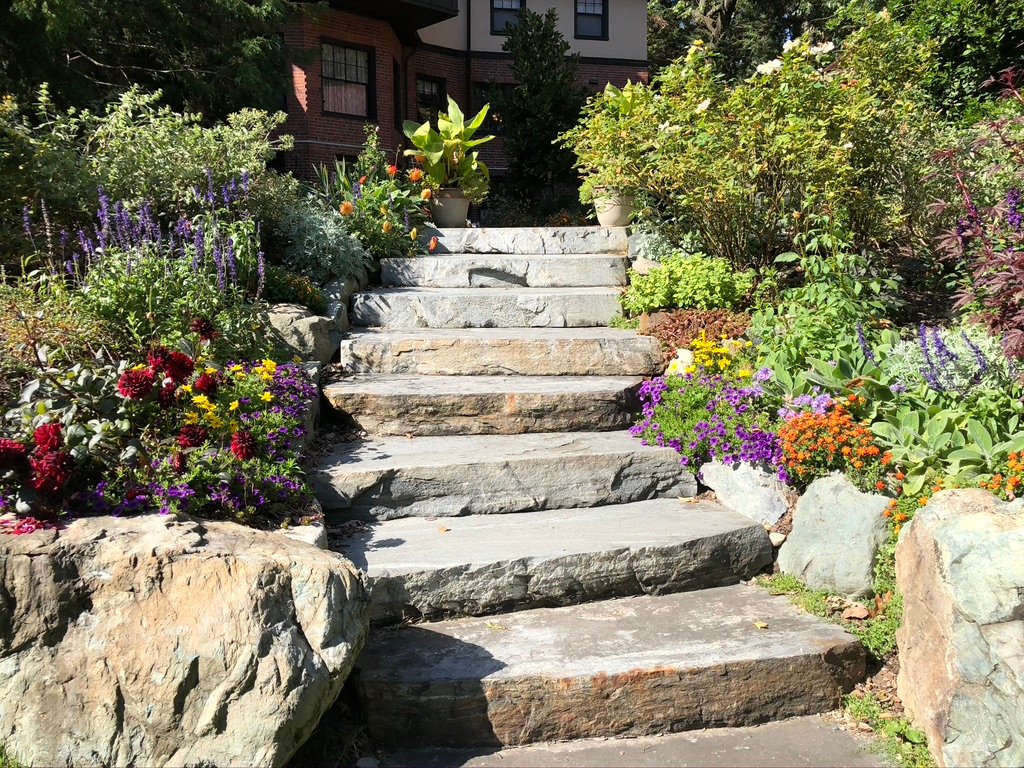
Perhaps the most distinguishing characteristic of the Arts and Crafts style was its insistence on featuring local materials whenever possible. This belief, a deliberate throwback to the medieval period that the movement so ardently adored, would originally have been a matter of simple necessity rather than one of choice: craftsmen of the Middle Ages, by and large, worked with whatever supplies were at hand, as transportation over large distances was simply too expensive and too difficult. For the Arts and Crafts movement, however, the preference for local materials was a deliberate rejection of the technological wonders of the Industrial Revolution and was thought to produce a truer, more aesthetically correct style of architecture. And, to a large degree, this was indeed the case, as houses (and gardens) produced from local stone, local woods, and in a vernacular style common to an area always seem to fit into the general fabric of a town or village far better than some strange, foreign import. (One only needs to see how out of place Japanese-style gardens look in New England, for example, or how lush English perennial treatments appear in Arizona, to quickly grasp this concept.) In terms of garden design, this desire to capitalize on all things local translates two ways: first, by selecting regional stone, wood, and brick for the hardscape; and second, by using native plants, rather than obscure exotics, for the softscape. Of course, in terms of plants, this can’t be an absolute rule, as gardens comprised entirely of native flora are often quite dull. But by and large, a heavy emphasis on indigenous materials is one of the trademarks of Arts and Crafts planting schemes.
Another hallmark of the Arts and Crafts movement in the garden is a rather curious blend—at least to many modern eyes—of formal and informal garden elements. That is to say that gardens of the period often shared the clipped hedges, axial arrangements, and even formal features such as geometric parterres and linear borders common to earlier styles, though in the case of Arts and Crafts gardens, these same layouts were planted in an entirely different fashion from their predecessors. Whereas earlier Victorian landscapes relied heavily on beds and borders of continually changing annual displays, the Arts and Crafts style preferred these same areas planted with perennial materials, and in a much more loose and flowing fashion. Woodland and “wild” gardens also became quite the rage, though again, these types of areas often occurred within a fairly organized layout. Arts and Crafts gardeners inherently understood that the minute man imposes straight lines in the landscape, nature attempts to soften them: perennials flop over edging, grass creeps into pathways, branches grow to obscure vistas. This is all part of the natural process, and the Arts and Crafts garden took this “visual decay” into account by framing individual garden elements and containing them within a strict axial layout, generally based on the house. This overlay of geometry will be critical to the success of your garden, for naturalistic gardens designed without it result in an amorphous, unpleasant, unstructured mass that only further degrades with age into a confused jumble of greenery.
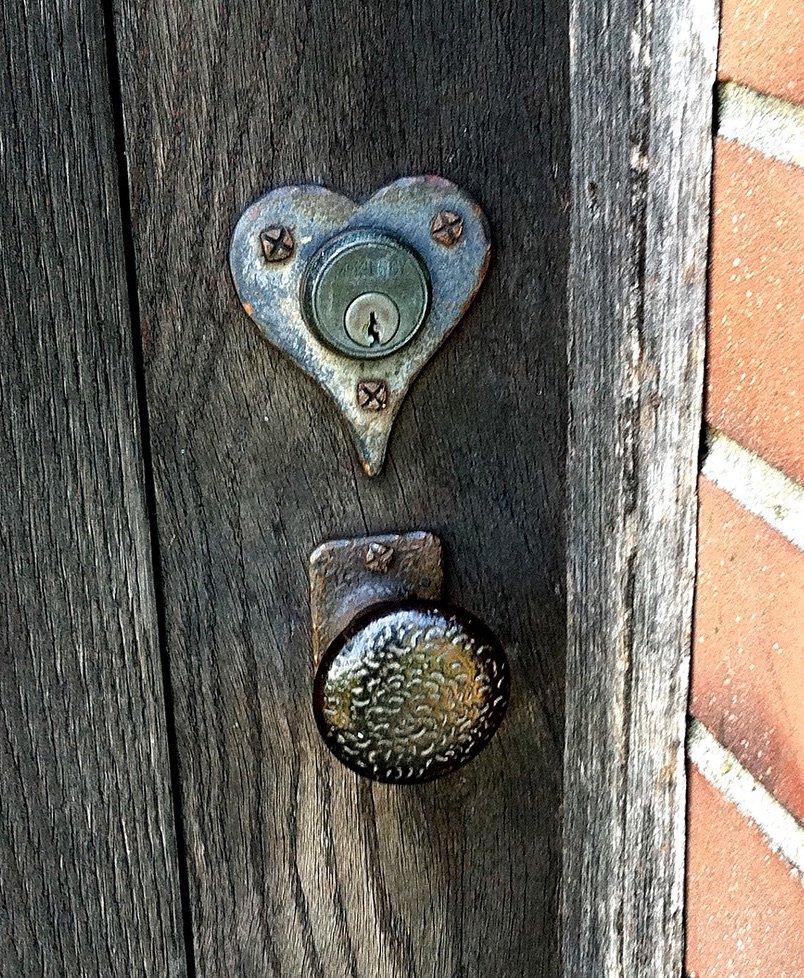
Finally, given the Arts and Crafts movement’s great emphasis on craftsmanship and detail, it’s only natural that these qualities would be reflected in the landscape. Plants in the Arts and Crafts garden were chosen not only for their flowering effect, but also for the form and color of their foliage, as well as for their contribution to year-round interest in the garden. In other words, to create an Arts and Crafts style garden today, you would eschew the most common varieties of plants found for sale in every box store, and instead seek out unique and individual specimens that will enhance not only their companions in the landscape, but also complement the setting of the house and garden as a whole.
While adhering to these principles is often easier said than done, the effort expended in seeking out local materials, the time spent in preparing a suitable garden plan, and the work involved in finding unusual and interesting plants—in effect, the craftsmanship that you invest in your landscape—is what will define the Arts and Crafts style in your next garden.
For further reading, check out Judith Tankard’s Gardens of the Arts and Crafts Movement available on Amazon and at libraries nationwide.