I have a complaint to make: spring is far too fickle for my liking. After what seems like endless months of fighting with shovel and blower through head-high drifts of snow, dodging deadly icicles that inevitably seem to form exclusively over my back door, and shuddering as each new arctic blast depletes what little is left of my household heating budget—suddenly spring arrives unannounced, like a dinner guest at the door an hour before the party starts—both very much welcome, and very much not.
In a dizzying whirl, the first tiny crocus and snowdrops appear, followed by early tulips, daffodils, anemones, Iris reticulata, and a host of other small spring bulbs. Then the main show arrives—everything from flowering dogwood to Darwin tulips to apple blossoms to camassia—appearing all at once with such a hurried presentation that it’s hard to appreciate even a tenth of it.
And how ephemeral this display can be! Depending on the capriciousness of windy spring weather, an entire tree full of heavenly scented peach blossoms may last only a day or two. Two years ago, I had an entire bed of tulips mowed down by hail. Last year, in the ultimate insult, the day before my wisteria was to bloom for the first time after a ten-year wait, every bud but one was wiped out in a late May frost. One bud! Ten years! What’s a gardener to do?
The answer is simple: bring in spring. You can easily transport spring indoors, where you have at least a modicum of control over both timing and the elements, and set the pace of the display to something less than Mother Nature’s normally eye-popping speed.
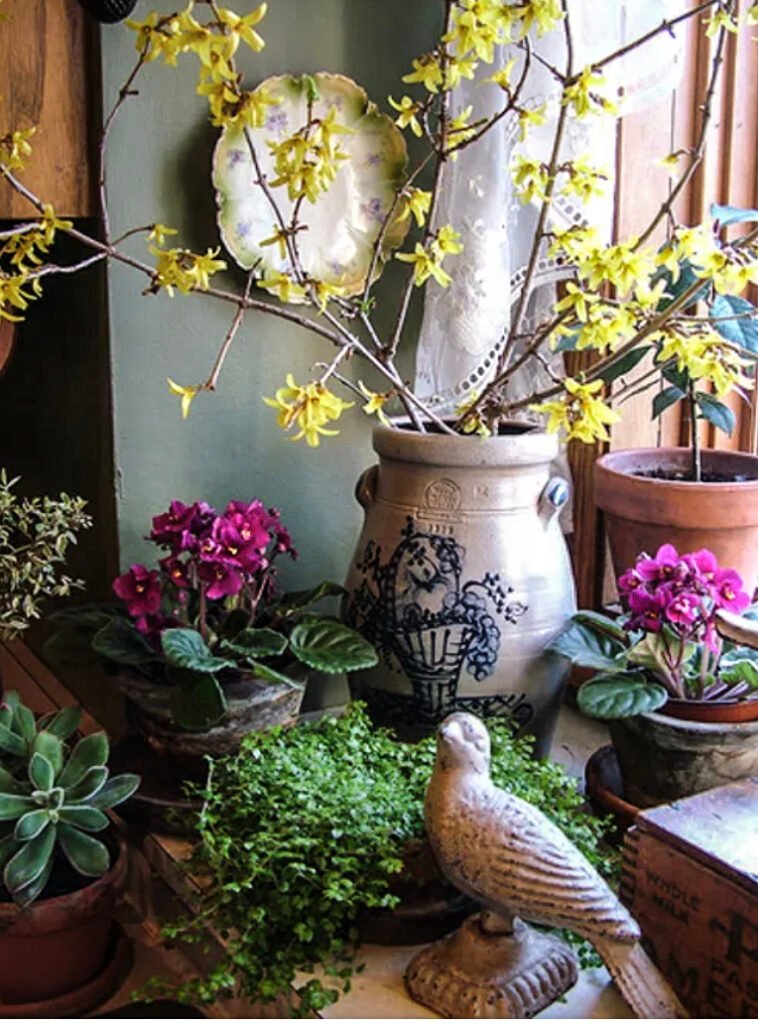
One favorite method: forcing branches. Almost every flowering shrub or tree, from ornamental quince to pears, can be forced indoors. Not only are arrangements of these cut branches extremely dramatic, but the scent associated with many of these species can only really be appreciated up close and indoors. By cutting branches in succession, you can prolong the display over several weeks.
Bulbs and Cut Flowers
Bring pots of bulbs indoors for fragrant kitchen cheer. Hyacinths, paperwhites, lily of the valley, and anemones can start now for late-spring blooms. Missed the fall planting? Grab potted ones from a local florist and set an August reminder for next year.
Get snipping outside too—most bulbs excel as cut flowers. Leave foliage to feed next year’s show.
Pro tip: Plant a dedicated cutting garden with early/mid/late tulips, narcissi, Muscari, and hyacinths. Cut freely without border regret.
Shrubs for Indoor Forcing (Boston Area) that you should include in your landscape
- Forsythia (Forsythia x intermedia)
- Flowering quince (Chaenomeles speciosa)
- Pussy willow (Salix discolor)
- Magnolia (Magnolia stellata or M. × soulangeana)
- Cherry (Prunus serrulata hybrids)
- Peach (Prunus persica)
- Apple/crabapple (Malus spp.)
- Pear (Pyrus communis)
- Witch hazel (Hamamelis mollis)
- Serviceberry (Amelanchier canadensis)
Quick Branch Forcing How-To
- Cut 12–18″ branches with plump buds at 45° angle; plunge in warm water.
- Strip lower buds to avoid rot.
- Place in cool (60°F), bright spot; mist daily.
- Refresh water every 2–3 days, recut stems.
- Blooms in 1–4 weeks. Tall vase by sunny window = instant spring.